Mobile Phone Technology
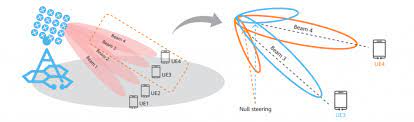
Beamforming conventional Array vs Beamformed Array..
image ©STL TechIn busy areas, most mobile cell towers are arranged to receive and send data within a 120-degree sector. These cell towers have three aerials mounted equally around them. This creates the hexagonal cell structure pictured in articles. This is ideal when demand for services is evenly distributed throughout the area. Having all cells hexagonal makes cell management simpler.
However, there are a number of areas where spreading the signal equally over the sector is not very effective and the signal needs to be targeted. For example, if the signal is designed to be sent up and down a railway track, then a signal tuned to this direction, makes sense. Similarly, in an FWA scenario where the 'target' is a small hamlet, it would be wasteful to put a signal over some fields. Therefore, it is possible to target the presumed demand for a particular cell tower where there is an assumed need. This is a static solution to the issue of unequal demand across an area.
Beamforming within 5G is a more dynamic feature that works with MIMO. The direction of the beam can be changed to target areas of higher demand, and can dynamically react to this demand in real time. Beamforming also enables a user with high data demand to be followed.
deepl.com [AI] has been used to improve the text in this description
We may have started to use our mobile phones to make phone calls but now these devices are key to our modern society. We use our mobile phones for directions in a strange city; to access our money through our banking and credit card apps; for tickets to travel whether that is bus, train or air; to watch videos; to take images and buy stuff.
But how does mobile phone technology work? mobilephonetechnology.co.uk seeks to provide information about the technology behind the mobile phone in order to aid understanding and promote more realistic discussions about the technology. Understanding some of the basics of mobile phone technology will help explain how things work and what can and cannot be done with mobile phone technology.
mobilephonetechnology.co.uk is a FREE online resource. Have you found it interesting? You can say thank you and buy me a coffee here. Thank you very much.
w : mobilephonetechnology.co.uk
e :
 Blog
Blog
© mobilephonetechnology.co.uk all rights reserved 2017-2026